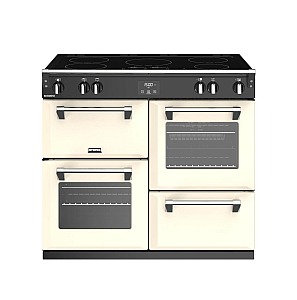
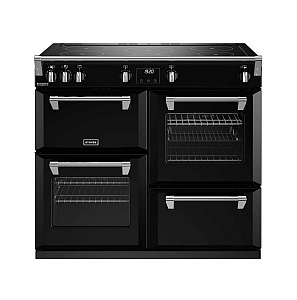
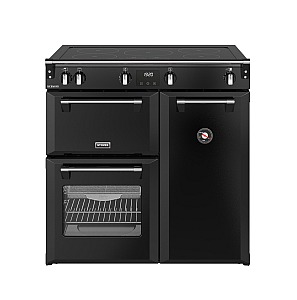
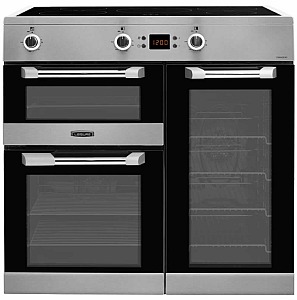
36 products from trusted UK retailers
Induction range cookers pair a fast, responsive induction hob with two, three or four electric ovens in one freestanding unit, so you get big-kitchen cooking space without a gas supply. They suit busy families, keen weekend bakers and anyone swapping an old ceramic or gas range for something quicker and easier to clean.
Choose from Belling, Stoves and Leisure models in 90cm, 100cm and 110cm widths, in cream, black, anthracite or stainless steel. Short on space? Our 90cm induction range cookers fit where a standard cooker and a cupboard used to be, while 110cm induction range cookers give you the most oven room.
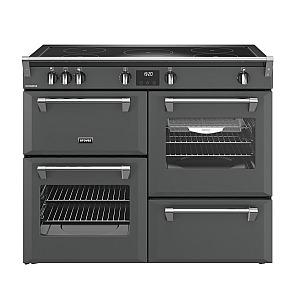
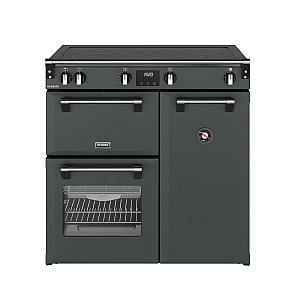
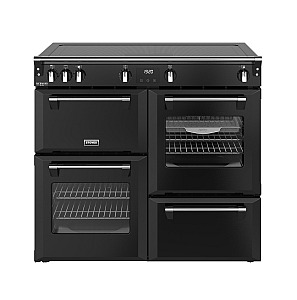
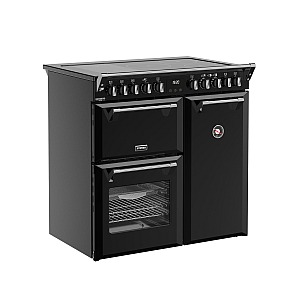
A range cooker is a wide freestanding cooker, usually 90cm to 110cm across, with more than one oven and a big hob on top. An induction range cooker swaps the gas burners or ceramic rings for an induction hob, so the whole thing runs on electricity.
Under the smooth top sit copper coils. When you put a pan with a magnetic base on an induction zone, the coil sets up a magnetic field that heats the pan itself rather than the glass. Lift the pan off and the heating stops. That's why induction feels so quick to respond, much like turning a gas flame up and down, but with a flat top you can wipe clean in seconds.
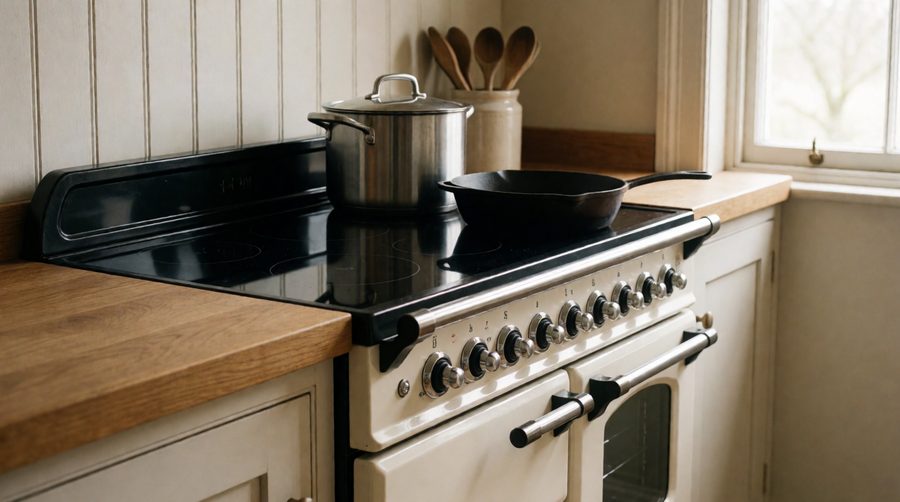
Most people come to induction for the speed. A pan of pasta water comes to the boil noticeably faster than on a ceramic hob. The boost setting on most zones pushes it along even quicker. You'll also notice how fine the control is at the bottom end. Melting chocolate straight in the pan or holding a sauce at a gentle simmer is easy, because the power changes the moment you touch the control.
Induction cooking is efficient too, because the heat goes into the base of the pan rather than warming the air around it. Less energy is wasted and your kitchen stays cooler on a long cooking day. All the induction range cookers we list carry an A energy rating for their ovens.
Safety is the other big plus, especially with children around. Pan detection stops a zone heating when nothing is on it. Every model here has a child lock on the hob too. And because the top is completely flat, spills don't bake on the way they do on ceramic. A damp cloth after dinner is usually all it needs.
The honest catch is cookware. Induction only works with pans that have a magnetic base, so some of your old aluminium or copper pans may need replacing (there's a quick test further down).
Width is the first thing to settle, because it decides how many ovens you get and whether the cooker fits your gap. Measure the space between the units and allow a little room either side, then check the height and depth on the product page before you order. Most of the models below are 90cm high and 60cm deep, so they line up with standard worktops.
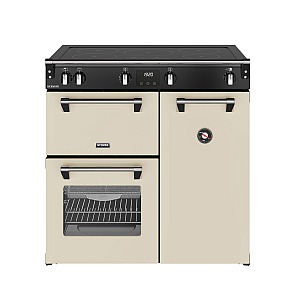
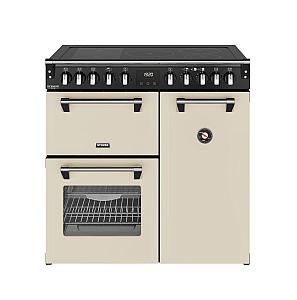
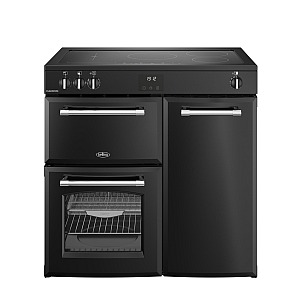
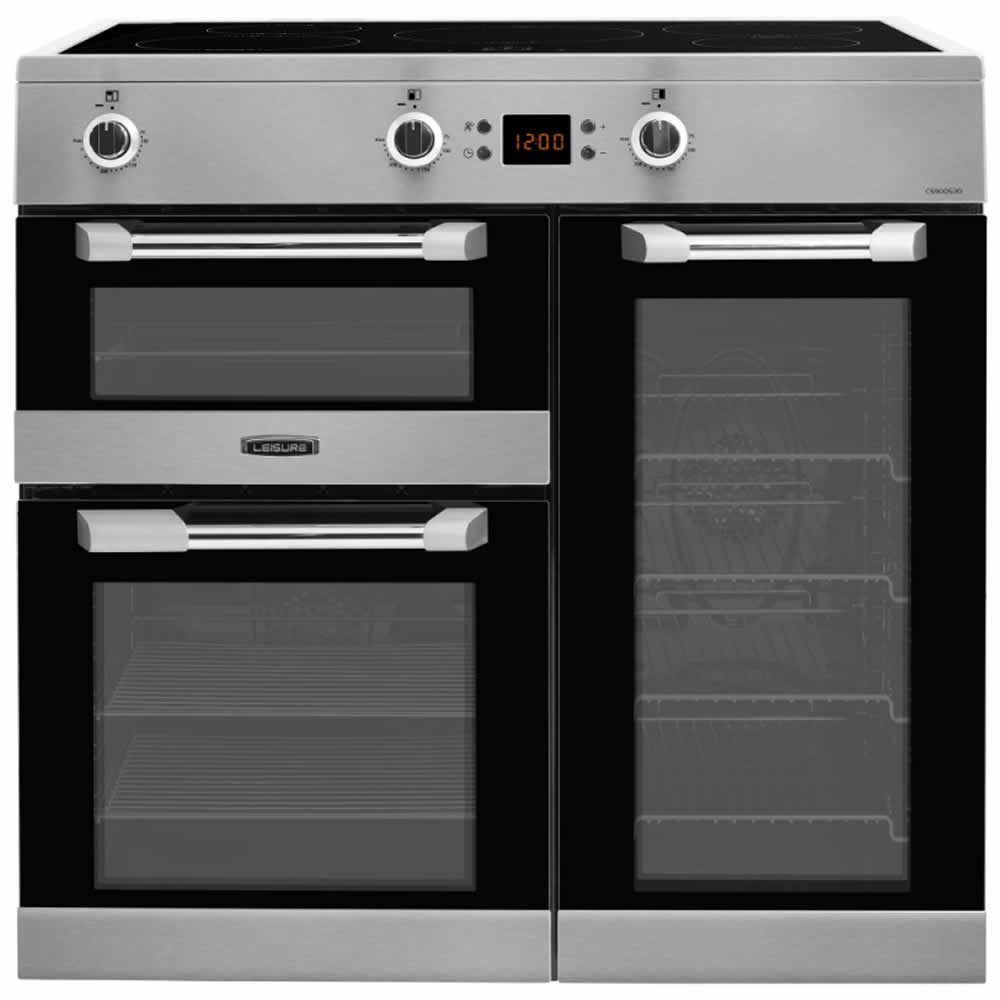
A 90cm induction range cooker is the easiest upgrade from a 60cm cooker, as it usually slots into the old cooker space plus a narrow cupboard. You'll get a five-zone hob, a main fan oven and a second oven or grill. It's a good fit for a smaller kitchen or a couple who cook from scratch most nights. Our 90cm range cookers with induction hobs start with the Leisure Cuisinemaster and the Belling Cookcentre.
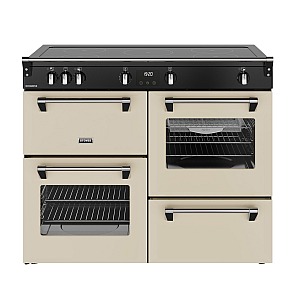
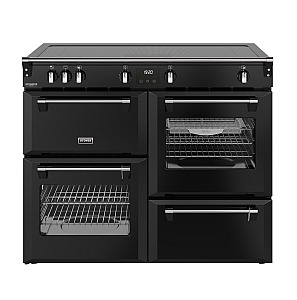
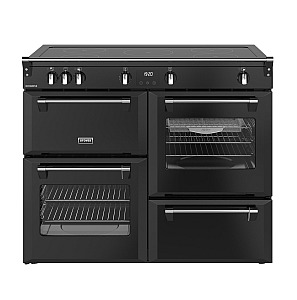
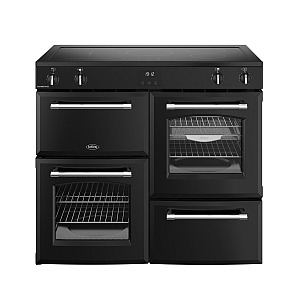
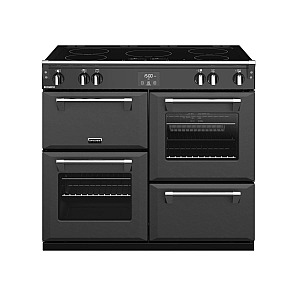
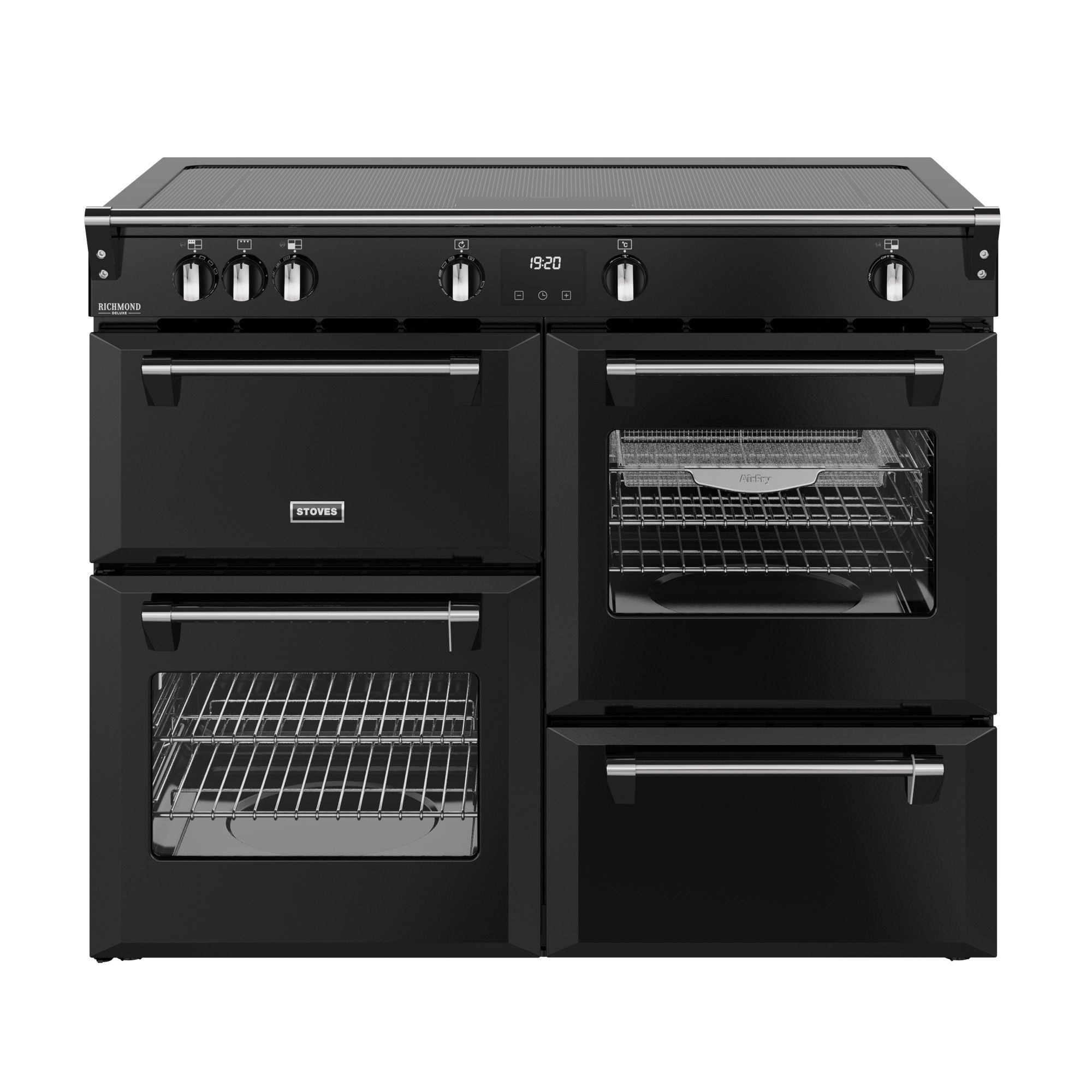
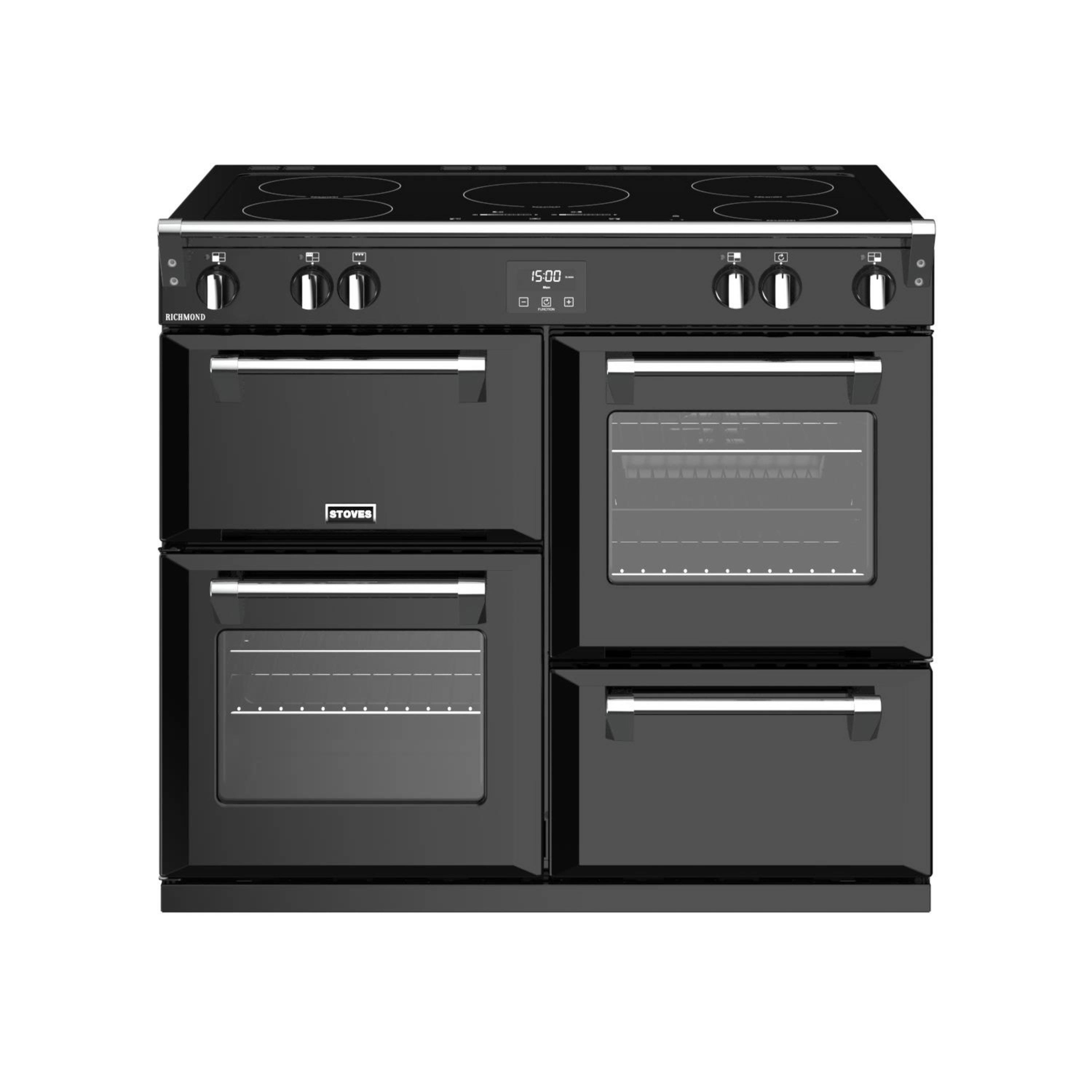
The 100cm size is where range cookers start to feel properly roomy. Many add a third or fourth oven, so you can roast, bake and keep plates warm at once. If you host Sunday lunch for the whole family, have a look at our 100cm induction range cookers, which include the four-oven Stoves Richmond models.
At 110cm you get the most capacity, often around 190 to 200 litres across all the cavities, with a tall main oven big enough for a large turkey. It needs a good-sized kitchen though, so measure twice.
Almost every range cooker with an induction hob has five zones. What changes from model to model is how flexible those zones are and how you control them.
A bridge zone joins two zones into one long cooking area, so a griddle pan, fish kettle or roasting tin heats evenly from end to end. Belling calls this Link+. Stoves simply call it a bridge function. If you cook breakfast for a crowd on a big griddle, it's well worth having.
Boost gives a zone a short burst of extra power for bringing water to the boil or searing meat. Most models have nine or ten power levels as well, which gives you plenty of room between a fast boil and a slow simmer.
Zoneless induction takes the rings away altogether. On the Stoves Richmond ZLS models, the FreedomFLEX hob lets you put up to six pans anywhere on the surface. Slide a pan to another spot and its power level follows it. It's the most flexible hob you can buy on a range cooker, though it sits at the top end on price. Stoves explains how its touch, rotary and zoneless induction hobs work if you'd like to compare the three.
Touch controls on the hob look sleek and wipe clean easily. Rotary dials on the front fascia feel more traditional and are easier to use without looking, which some cooks prefer. Stoves offers both on its Richmond range, so you can pick the feel you like without giving up induction.
The hob gets the attention, but you'll probably use the ovens just as much. Think about how you cook before you look at the litres.
The main oven is nearly always a multifunction oven, with fan oven, conventional, grill and defrost settings, so you can match the heat to the dish rather than juggle the temperature. Many add slow cook or pizza modes too. The Stoves Richmond S1000EiMK2, for example, has 13 functions in its main cavity. A second oven gives you a separate temperature, so the roast and the crumble can cook at once. A separate grill means you can make toast without tying up an oven.
Belling's Farmhouse and Cookcentre models, plus most of the newer Stoves Richmond range, include an AirFry function with its own tray. It crisps chips and wings with little or no oil, which can save you finding worktop space for a separate air fryer.
Cleaning varies more than you might expect. Most of our range uses easy clean enamel linings that wipe down when cool, which is fine for most families if you clean little and often. Catalytic liners, as on the Leisure Cuisinemaster, soak up grease while you cook. Pyrolytic ovens go further, heating to a very high temperature to turn food residue into ash you can sweep out. It's the easiest option of all, but it's rarer on range cookers and usually costs more. Of the models listed with us, only the Smeg Classic pyrolytic versions have it.
Here's how our induction range cookers line up by range. Prices move every day in the feed, so we've given rough price bands rather than exact figures. Check the product page for today's price and the guarantee, as it varies from model to model.
| Range | Widths | Ovens | Hob | Style and colours | Price band |
|---|---|---|---|---|---|
| Leisure Cuisinemaster CS90D530X | 90cm | Three cavities, catalytic liners | Five zones, touch control | Contemporary, stainless steel | Around £1,000 to £1,100 |
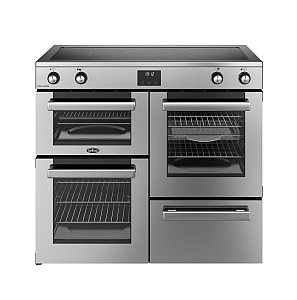
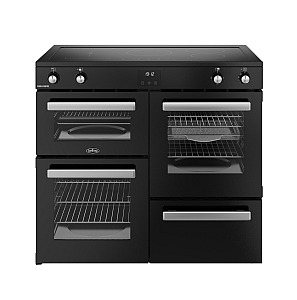
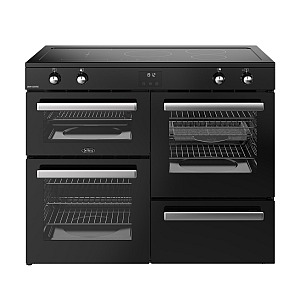
| Belling Cookcentre | 90cm, 100cm, 110cm | Twin cavity, up to 194 litres, AirFry | 5 zone induction hob with bridging | Contemporary, stainless steel or black | Around £1,550 to £1,800 |
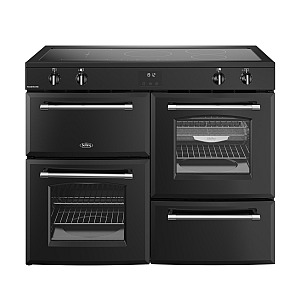
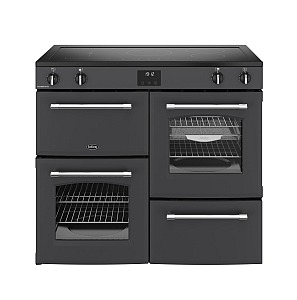
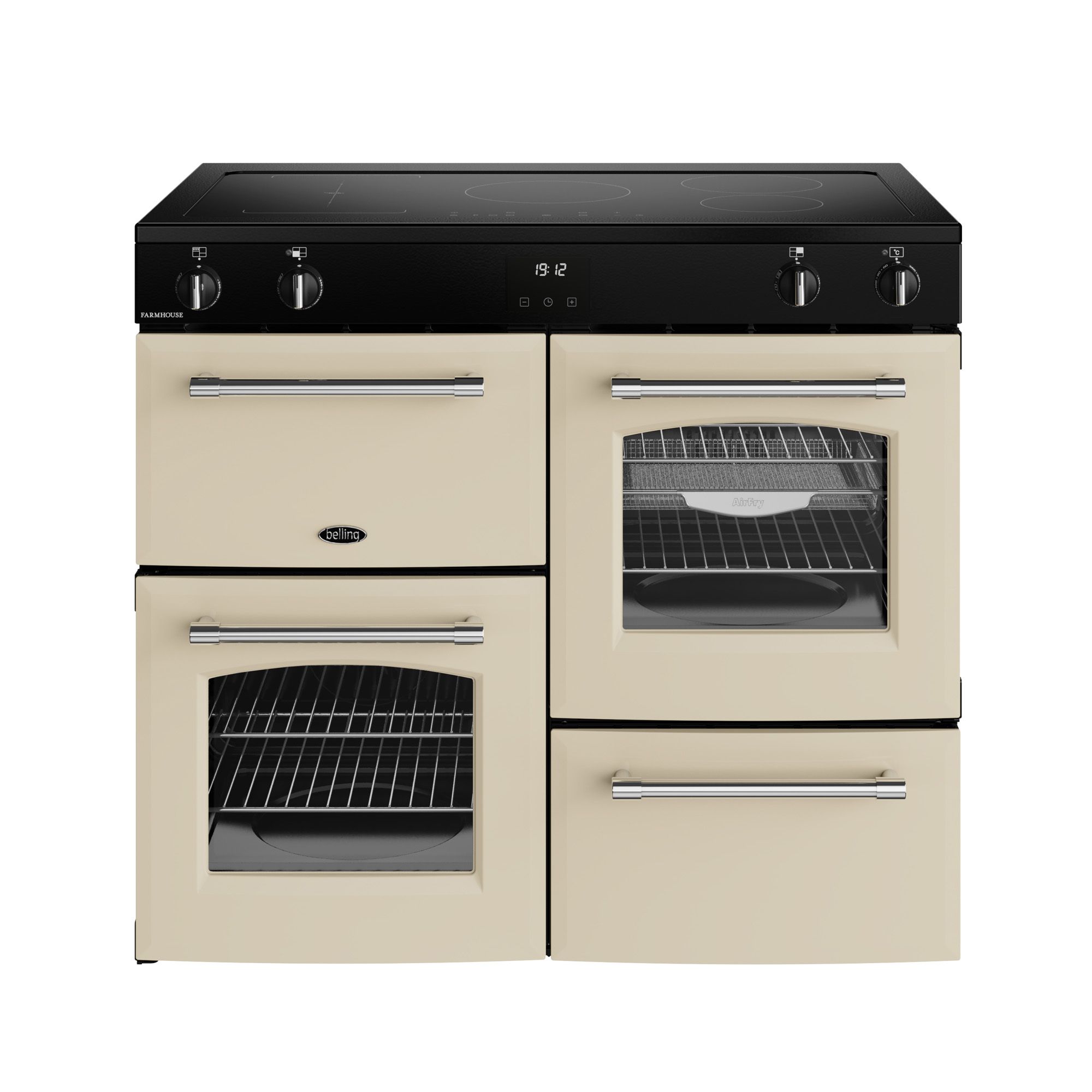
| Belling Farmhouse | 90cm, 100cm, 110cm | Two or three cavities, up to 194 litres, AirFry | 5 zone induction hob with bridging | Traditional, cream, black or anthracite | Around £1,550 to £1,700 |
| Stoves Richmond S1000EiMK2 | 100cm | Four ovens, 202 litres | Five zones, boost, ten power levels | Traditional, black, cream or anthracite | Around £2,300 |
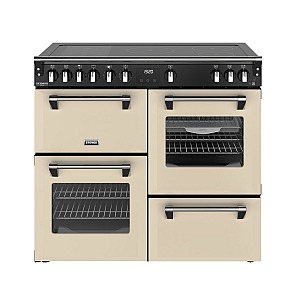
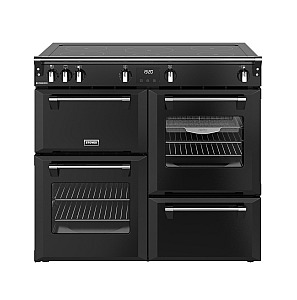
| Stoves Richmond Ei and TCH | 90cm, 100cm, 110cm | Three cavities on 90cm, Quad Oven with four on 100cm and 110cm | Five zones with bridge, touch or dials | Traditional, black, cream or anthracite | Around £2,600 to £3,100 |
| Stoves Richmond ZLS | 100cm, 110cm | Four ovens, AirFry | FreedomFLEX zoneless, up to six pans | Traditional, black | Around £4,900 to £5,000 |
The Smeg Classic models (C92IPX2, C92IMX2 and C92IPMB2) are listed with us too, but they're currently missing from the retailer's feed, so they won't show in the grid until stock returns.
All three brands come from Glen Dimplex Home Appliances and share a lot of engineering, so the choice often comes down to looks, features and budget.
Leisure is the value pick. The Cuisinemaster gives you a five-zone induction hob and three cavities for the least money, which makes it a sensible choice for a first range cooker or a rental property.
Belling sits in the middle. The Cookcentre has a clean, modern look in stainless steel or black, while the Farmhouse has a more traditional face with a chunky handrail. Both come with an air fry setting and linked zones as standard. If you love the country look, our Belling Farmhouse range cookers come in three classic colours.
Stoves is the premium choice, with the Richmond as its classic range. You get four ovens on the bigger models, a choice of touch or dial controls and the option of zoneless induction. Have a look through all our Stoves range cookers to see the full set.
You'll see Rangemaster, Smeg and Bertazzoni on other sites. Rangemaster is the best-known range cooker name in the UK. Smeg and Bertazzoni bring an Italian look. They make lovely induction range cookers too, but a Rangemaster or Bertazzoni model with an induction hob tends to cost a good deal more than the Belling and Stoves equivalents. For independent test results across brands, Which? reviews range cookers each year.
Only pans with a magnetic base work on induction. Cast iron, enamelled cast iron and most stainless steel pans are fine. Plain aluminium, copper and glass cookware won't heat at all unless the base has an induction plate built in.
The quickest test is a fridge magnet. If it sticks firmly to the bottom of the pan, it'll work. Many pans also show a small coil symbol on the base. Flat bases work best, so a round-bottomed wok or a warped old frying pan won't make good contact with the cooking zone.
It's worth buying decent cookware when you make the switch. Thin, cheap pans can buzz on high settings and heat unevenly. A heavy flat base gives you the even, fast heat that makes induction cooking such a pleasure.
An electric range cooker draws far more power than a standard cooker, so it can't plug into a normal socket. It needs to be wired into a dedicated cooker circuit with its own switch. The installation manual tells you the rating it needs.
If you already have a cooker circuit, a qualified electrician can check whether it's big enough for the new model. If it isn't, or you're moving from gas, you'll need a new circuit. In England and Wales a new circuit is notifiable work under the building regulations, so use an electrician registered with a competent person scheme who can certify it for you. You can find a registered electrician near you on the official register. Electrical Safety First has advice on safety around the home.
Don't forget the practical bits too. Range cookers are heavy (the models here weigh roughly 80kg to 115kg), so check you can get it through the doors and that the floor is level. Leave the gap the manual asks for either side. Your cooker hood should be at least as wide as the hob too.
Does anyone in your home have a pacemaker or another implanted medical device? Check with their doctor and read the cooker's manual first. Manufacturers give advice on keeping a distance from the hob when it's on.
If you're not sure induction is right for you, it helps to see how it compares with the other two options.
A ceramic hob heats a ring under the surface, which then heats the pan. It works with any flat pan and the cookers cost a little less, but it's slower to heat up and cool down. Our ceramic hob range cookers are worth a look if you'd rather keep your current pans.
A dual fuel range cooker has gas burners on top and electric ovens below. It's a good choice if you already have gas in the kitchen and love cooking on a flame. Browse our dual fuel range cookers to compare.
Induction is the quickest and most efficient of the three. It's the easiest to clean as well. If you're happy to check your pans, it's the one most people find hardest to go back from.
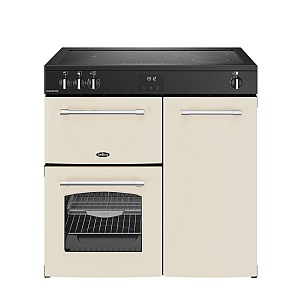
A range cooker is the centrepiece of the kitchen, so colour matters. Cream suits a traditional cottage kitchen, black and anthracite look smart with almost anything, while stainless steel feels modern and pairs well with other steel appliances. You can browse our cream range cookers, black range cookers and stainless steel range cookers by finish.
Run through these before you order your new electric range cooker. They're the things people most often wish they'd checked first.
They're usually cheaper to run than a ceramic hob, because more of the energy goes straight into the pan. How much you save depends on your tariff and how often you cook, but the hob also heats faster, so it's switched on for less time.
Only if your current pans don't have a magnetic base. Hold a fridge magnet to the bottom of each one. If it sticks firmly, the pan will work.
No, induction range cookers need their own cooker circuit, fitted or checked by a qualified electrician.
A bridge zone joins two set zones into one long area for a griddle. A zoneless hob has no set zones at all, so you can place pans of any size anywhere on the hob.
Go by your space first and your cooking second. A 90cm model suits most kitchens and couples, a 100cm model gives a busy family more oven room and a 110cm model is the one for big gatherings.
It's one of the safer options. The surface only warms up from the pan, pan detection stops a zone heating without a pan and all our induction range cookers have a hob child lock. The ovens still get hot, so the usual care applies.